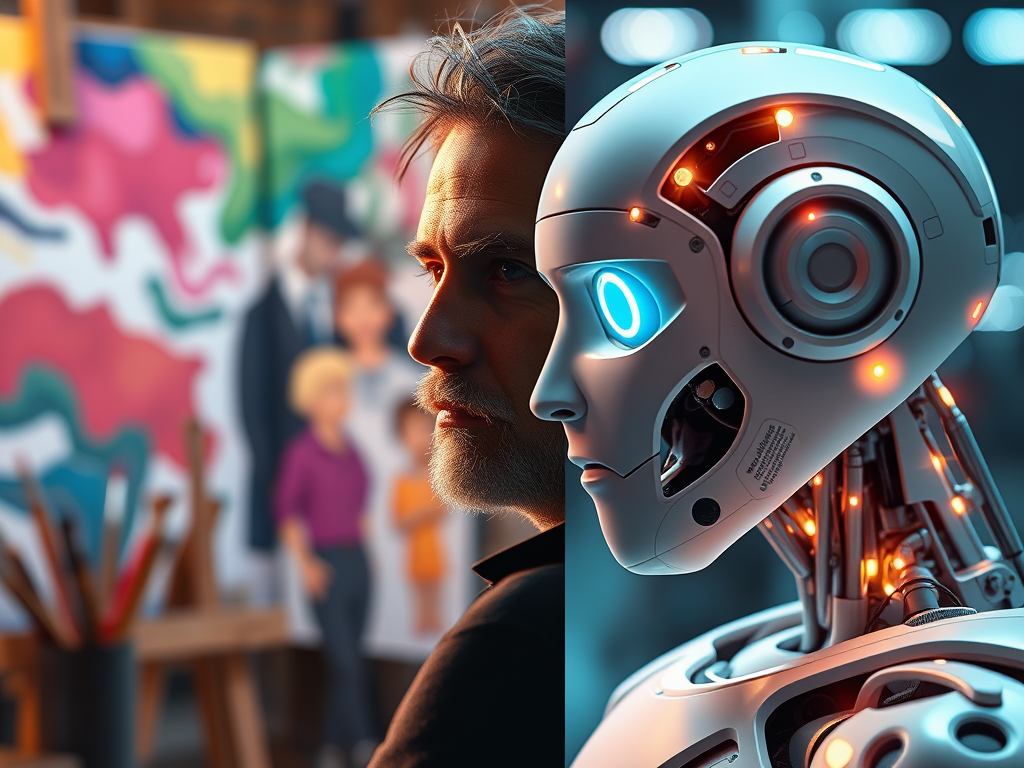
Creativity is something deeply human, isn’t it? It grows from personal memories, emotions, curiosity, and gradual accumulation of our experiences. We usually do not think of it as something that can be switched on or generated instantly.
That is why the rise of artificial intelligence that can write poems, stories, and ideas has unsettled so many people. When AI produces work that sounds imaginative, the question feels unavoidable. Is this real creativity, or something that only looks like it?
A recent study published in Scientific Reports took this question seriously and tested it directly. Instead of debating definitions, the researchers chose a simpler approach. They asked what happens when humans and AI are judged using the same rules.
The results offer a clearer picture of where AI creativity stands today, and where it falls short.
What Creativity Means in Scientific Research
In everyday life, creativity often means originality or imagination. In psychology, it is broken down into specific abilities that can be studied and measured.
One of the most important of these abilities is generating ideas that are genuinely different from others. Someone who repeatedly produces similar ideas may be competent, but someone who can move across distinct ideas is usually seen as more creative.
Researchers call this “divergent thinking”. Outside the lab, it simply means not getting stuck in one mental lane.
How Researchers Measure Creative Distance
To measure this kind of thinking, scientists look at how far apart ideas are in meaning (referred to as semantic distance).
For instance, some words naturally sit close together. Others feel unrelated. Consider “river” and “ocean”, they share obvious connections, right?. How about “River” and “democracy”? No!, right?
When a person produces ideas that span larger gaps in meaning, it suggests a wider and more flexible way of thinking (i.e. if the semantic distance between ideas is more, it implies more creativity!). This approach avoids subjective judgments about whether something sounds clever. Instead, it focuses on how much conceptual ground is actually covered.
Because both people and AI systems generate language, this method allows for a direct comparison without changing the criteria.
A Simple Task That Reveals a Lot
The study centers on a task that looks almost trivial at first glance. Participants are asked to list words that differ from one another as much as possible.
The task is easy to understand, but the analysis behind it is not. Each response is scored based on how different the meanings of the words are from one another.
Researchers from Université de Montréal used automated tools to analyze more than 100,000 human responses and compare them with outputs from several large language models. Every participant followed the same instructions. No one received special treatment.
This matters because earlier research often compared humans and machines using different standards. Here, the playing field was level.
When AI Performs Surprisingly Well
Some of the results may catch readers the off guard!
Several AI models scored higher than the average human participant. One model clearly exceeded the human average, while another came very close. These findings help explain why AI generated content can feel impressive or even unsettling.
On a basic level, modern language models are capable of producing a wide range of ideas. When measured narrowly, they can match what many people produce in short creative tasks.
But focusing only on averages hides an important detail.
Why the Most Creative Humans Still Stand Apart
Creativity is rarely defined by the middle of the pack. The most influential ideas usually come from people at the top.
When the researchers examined higher scoring participants, the pattern changed. Humans in the top half of creativity scores consistently outperformed every AI model in the study. The difference became even larger when looking at the top quarter and the top tenth.
Even the strongest language models could not match the level of idea diversity produced by the most creative humans. This suggests that AI can imitate creativity convincingly, but it struggles to reach its upper limits.
One likely reason is where ideas come from. Human creativity is shaped by emotion, personal history, and lived experience. AI draws from patterns in existing text. Those differences may not always be obvious, but they become harder to ignore at the highest levels.
What Happens With Longer Writing
The researchers also wanted to know whether these differences extend beyond single words. To find out, they analyzed longer pieces of writing, including poems, movie summaries, and short stories.
AI performed well, especially in longer formats. Short stories, in particular, gave models more room to combine ideas and explore different directions.
Still, human writing showed greater diversity overall, especially in poetry and structured summaries. When the results were visualized, human and AI texts tended to occupy different regions, suggesting that they approach creativity in distinct ways even when scores appear similar.
Why AI Creativity Depends on Instructions
One of the most revealing parts of the study involved how AI responds to guidance.
When models were given specific instructions, such as drawing from different types of words, their creativity scores increased. Adjusting settings that influence how predictable or varied responses are also made a noticeable difference.
This highlights a fundamental distinction. Human creativity develops slowly and reflects long term growth. AI creativity changes instantly depending on how it is instructed.
Rather than creating ideas in the human sense, AI treats creativity as something that can be adjusted on demand.
What This Means for the Future of Creativity
This research offers a grounded response to fears about AI replacing human creativity.
Language models can outperform average human output in some narrow tasks, but they do not surpass the most creative individuals. The highest levels of originality remain human.
That does not make AI irrelevant. It can help generate ideas, expand creative options, and reduce creative blocks. Humans still provide meaning, judgment, and direction.
Creativity remains human driven. AI now sits alongside it as a powerful tool, not a replacement.
The study is published in the journal Scientific Reports by researchers from Université de Montréal.
Knowledge becomes useful when it is easy to understand and simple to apply. Our goal at usefultoolsandproducts.com is to break down complex topics and highlight topics that support better decisions in everyday life.

Leave a Reply